Condenser fan
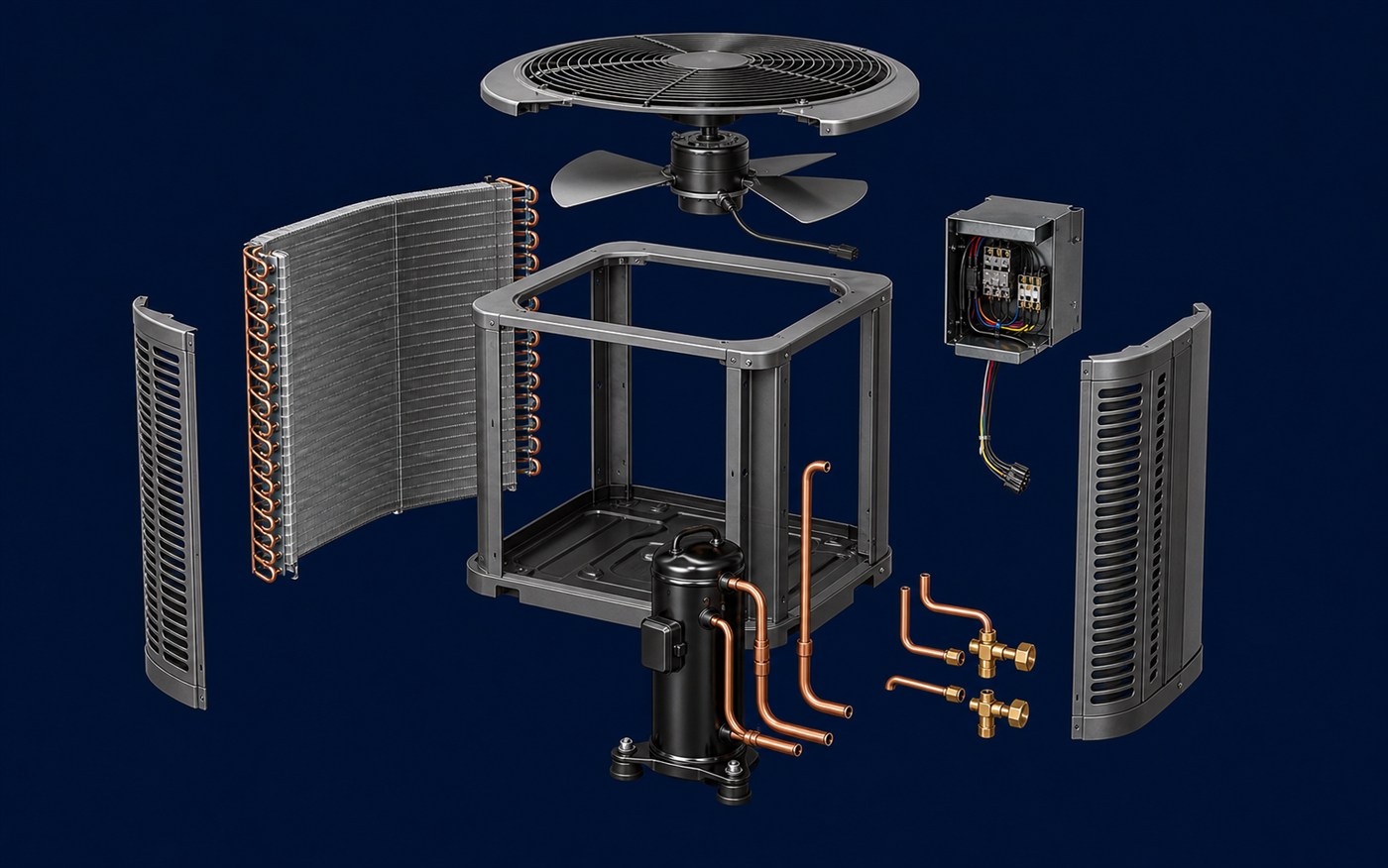
Pulls outdoor air through the coil and discharges warmer air away from the unit. It has an electric motor; refrigerant never flows through that motor.
 608 Study Buddy
Interactive HVAC Component Lab
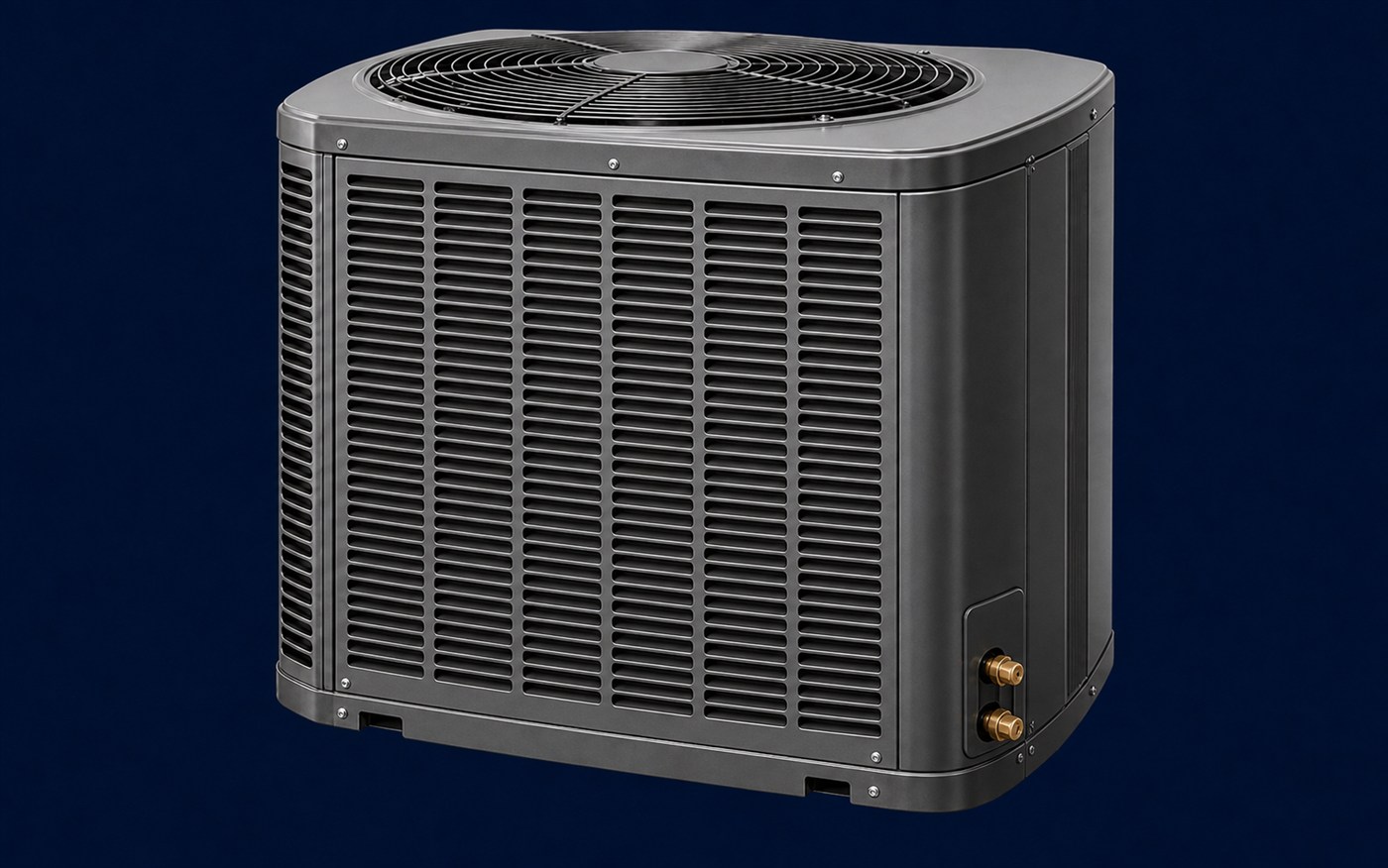
Open the cabinet, pull the major parts apart, and follow both moving air and refrigerant. This is the outdoor half of a conventional residential split air conditioner in cooling mode.
Safety: Exam-prep material, not service instructions. Refrigerant work involves high pressure, electrical, burn, frostbite, and asphyxiation hazards. Follow the equipment manufacturer’s instructions, applicable codes, and your training. Terms
Touch, separate, trace
Refrigerant leaving the indoor evaporator returns as vapor, normally slightly superheated, so liquid does not enter the compressor.
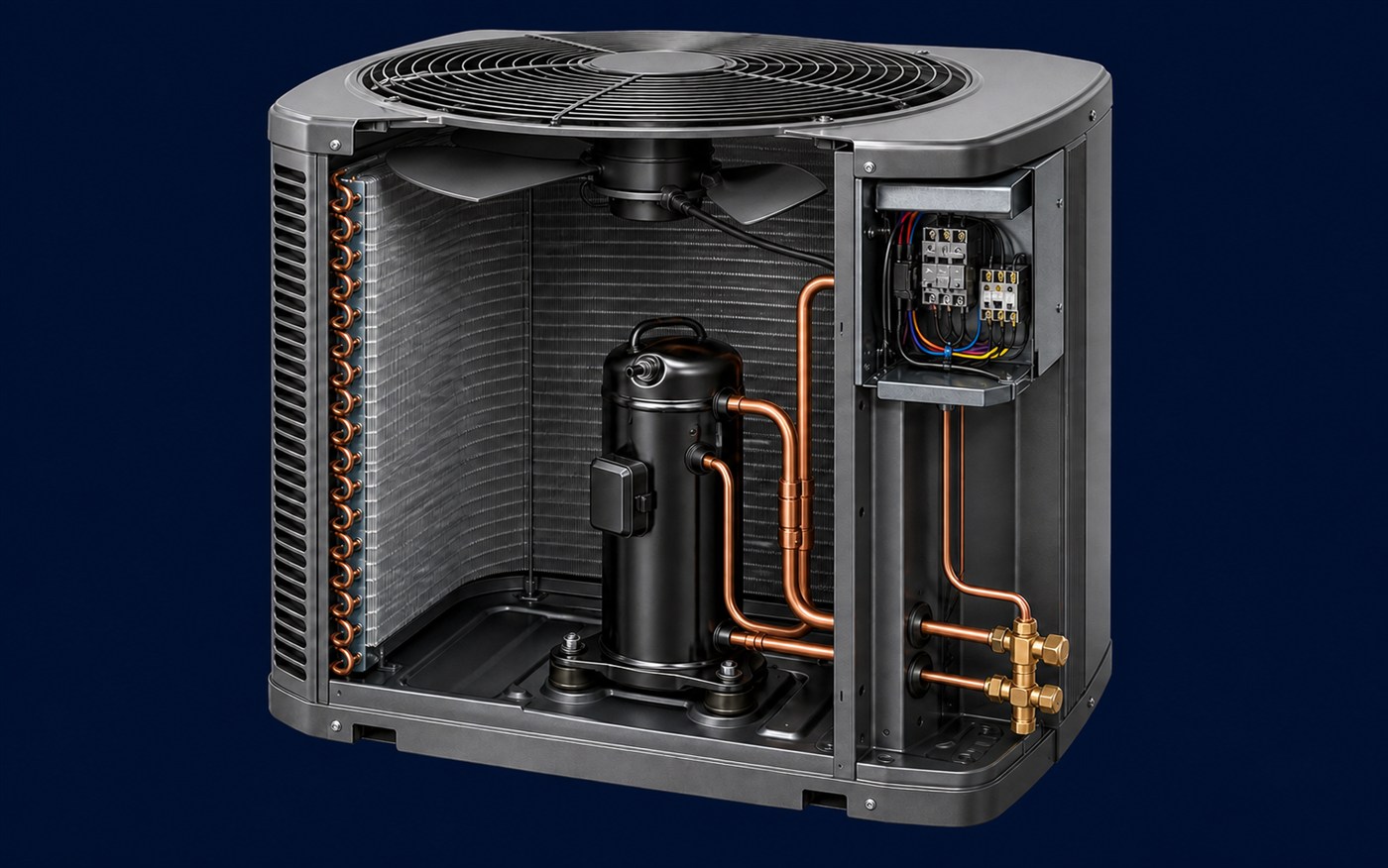
Cutaway view: inspect the major components in their normal assembled positions. Exact shape and placement vary by model.
Low-pressure vapor returns from the indoor evaporator through the suction line. The compressor sends hotter, high-pressure vapor into the condenser coil.
Language that matters
The condenser coil is the heat exchanger where hot high-pressure vapor rejects heat and condenses. The outdoor condensing unit is the cabinet and equipment assembly that normally includes that coil, the compressor, the outdoor fan, electrical controls, piping, and field connections.
Start at the larger suction line entering the outdoor unit. Refrigerant returning from the indoor evaporator should be vapor, normally slightly superheated so liquid does not enter the compressor. Compression raises both its pressure and temperature. The hot discharge vapor then flows into the outdoor coil, where the fan-driven outdoor-air stream carries heat away.
As heat leaves, the high-pressure refrigerant desuperheats, condenses, and can then subcool before leaving the coil as liquid. That high-pressure liquid travels through the smaller liquid line toward the indoor metering device. The pressure drop happens at that metering device — not in the condenser fan, not at the compressor, and not merely because the tubing gets smaller.
| Point to trace | Typical state | Pressure side | What happens next |
|---|---|---|---|
| Suction line entering unit | Vapor, normally superheated | Low side | Enters the compressor |
| Compressor discharge | Hot vapor | High side | Enters the condenser coil |
| Condenser outlet / liquid line | Liquid, often subcooled | High side | Heads toward the metering device |
| Outdoor air stream | Air, not refrigerant | Not part of the sealed circuit | Enters through the coil and leaves warmer |
Pulls outdoor air through the coil and discharges warmer air away from the unit. It has an electric motor; refrigerant never flows through that motor.
Transfers heat from the refrigerant to outdoor air. In cooling mode, high-pressure vapor becomes high-pressure liquid while moving through this heat exchanger.
Draws in low-pressure vapor and discharges high-pressure, higher-temperature vapor. It supplies the pressure difference that keeps refrigerant circulating.
Route, switch, and protect electrical power for loads such as the compressor and fan. The exact contactor, capacitor, board, and protection arrangement varies.
Provide the outdoor connections for the suction and liquid lines on a typical split system. Exact valve placement and service-port design vary by manufacturer.
The indoor evaporator and its metering device are elsewhere in a conventional split system. Open the matching indoor lab to see them. A heat pump also adds reversing components that this straight-cool model intentionally omits.
Connect the picture to the exam
Independent study material; not affiliated with or endorsed by the EPA. This interactive model is for concept learning only and does not replace manufacturer service literature, training, certification, PPE, lockout/tagout, or safe refrigerant-handling procedures.