
EPA 608 vs 609: which certification do you need?
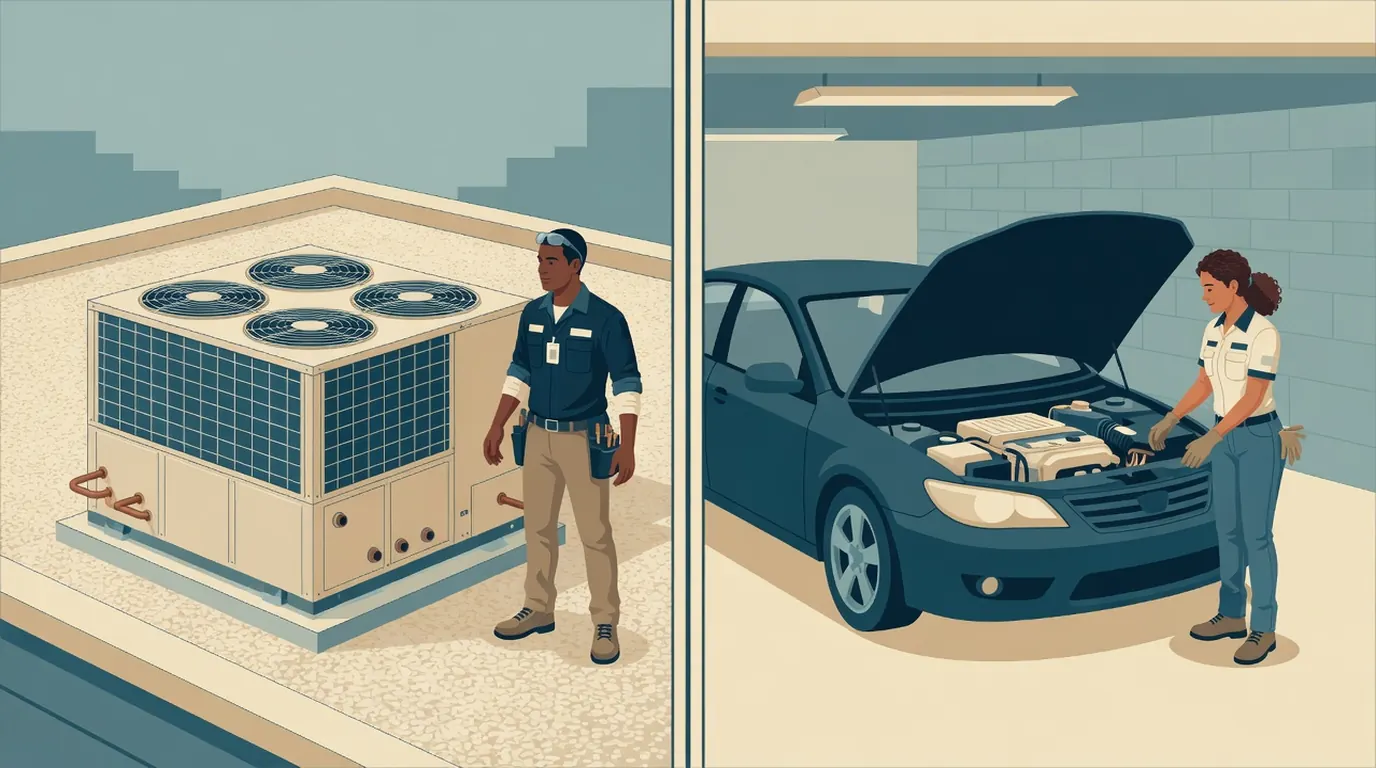
A common question on HVAC forums is whether the word “Universal” makes a 608 card valid for car air conditioning. It means coverage across the Section 608 equipment types. It does not merge two separate certification programs. Start with the appliance and the work being performed, then choose the applicable credential.
Compare the work before comparing the cards
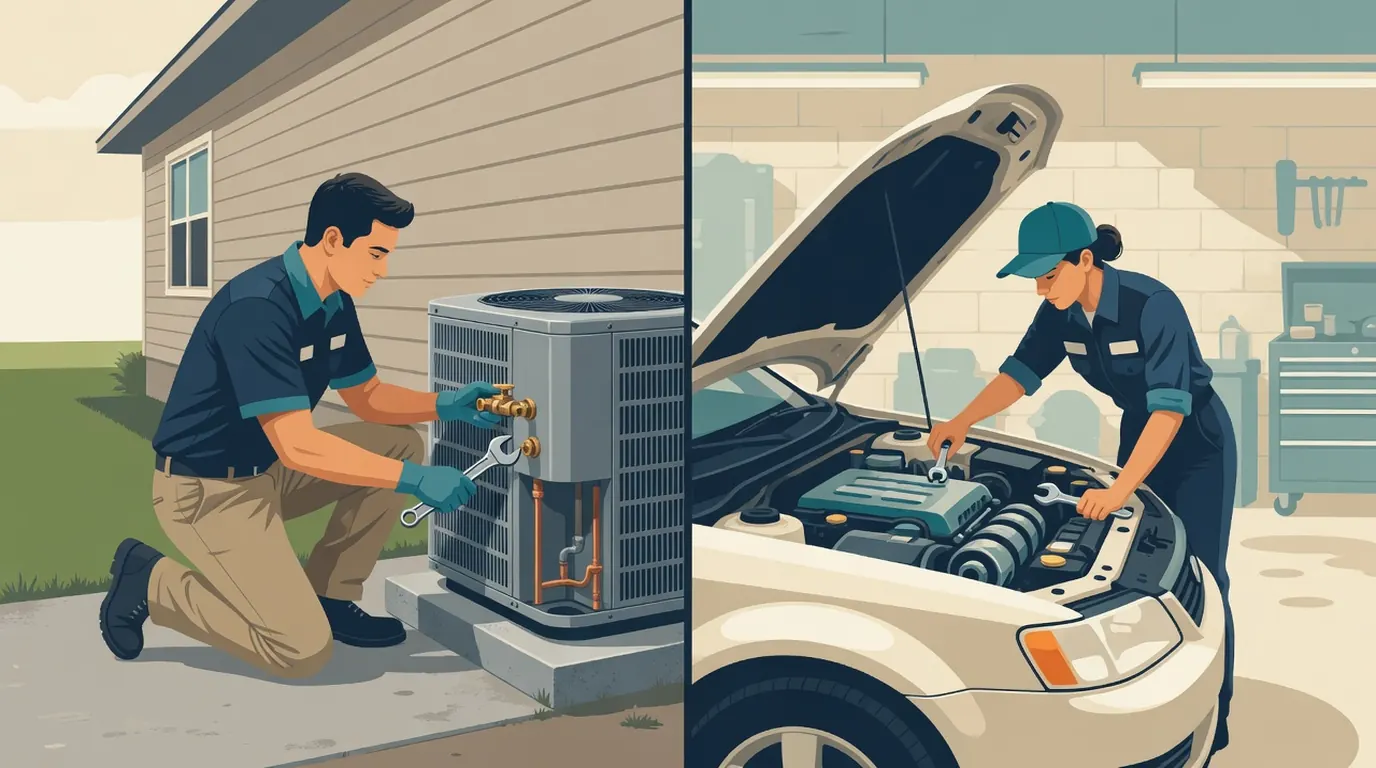
For a building's refrigeration or air-conditioning equipment, identify the appropriate 608 type. For service on a vehicle's passenger air conditioner for consideration, look to Section 609. EPA's 609 program page explains that consideration includes payment or bartering, so exchanging services can matter as well as charging money.
Consider a shop that maintains its building's comfort-cooling system and repairs customers' car air conditioners. Those are separate appliances with different certification paths. The fact that the same employee handles both, or that both jobs involve gauges and refrigerant, does not make the requirements interchangeable.
Write down what the equipment cools and how it is classified before answering a practice question. Avoid shortcuts such as “it has wheels, therefore 609” or “the technician has Universal, therefore everything is covered.” EPA's overlap guidance includes specific cases that make those shortcuts unreliable.
What Universal 608 includes
Section 82.161 separates small appliances, medium-/high-/very-high-pressure appliances, and low-pressure appliances into its certification categories. Universal covers the work described across those Type I, Type II, and Type III categories. The same section separately addresses MVACs and MVAC-like appliances.
That arrangement matters more than the everyday meaning of “universal.” A certification name should be read within the program that issues it. Our exam overview shows the 608 structure, while the Type II study guide focuses on the equipment category often associated with building air-conditioning work.
When describing qualifications on a resume or work order, use the exact credential names. “EPA certified” leaves an employer guessing whether you mean 608, 609, or a particular 608 type. Specific wording lets the person assigning work check the match without relying on assumptions.
The MVAC-like exception
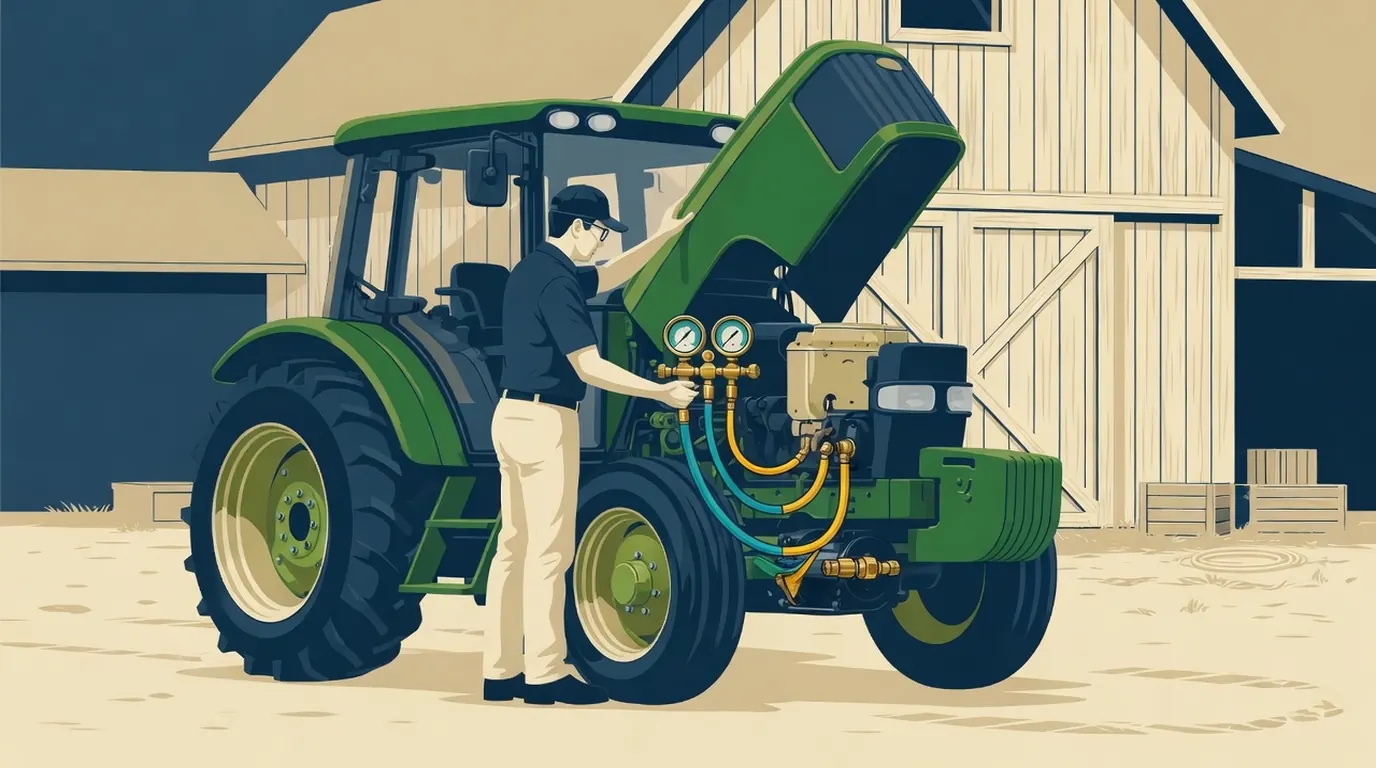
EPA identifies air-conditioning appliances on farm equipment and other non-road vehicles as examples of MVAC-like appliances. Technicians servicing those appliances can qualify through either Section 608 Type II or Section 609. EPA recommends considering 609 because of the similarities to motor vehicle air conditioners.
This is a defined overlap, not permission to substitute Type II for 609 on every automobile. When someone says “Type II can cover vehicle equipment,” ask whether the example is an MVAC-like appliance. Leaving out that word changes the meaning of the answer.
EPA also gives a bus example: buses using CFC-12 are treated as MVACs, while buses using HCFC-22 are high-pressure equipment covered by Type II. The example shows why equipment classification sometimes requires more detail than a photograph or the name of the vehicle.
For study, turn the exception into a comparison exercise. Write “passenger-car MVAC service for pay” beside “MVAC-like farm-equipment air conditioner.” Explain why the certification options differ. Do not extend the exception to cargo refrigeration or other equipment without checking its actual classification.
Training and testing are different programs too
EPA's overlap page says Section 608 review classes are voluntary, while passing the appropriate approved test is required. Section 609 requires training through an approved program and a test. Both credentials involve an approved program, but their preparation and subject matter should not be assumed identical.
Do not transfer testing-format claims from an automotive course to a Universal 608 exam. For 608 format details, read whether the EPA 608 exam is open book. Ask the 609 provider about its own course and examination arrangements instead of treating a friend's experience as a rule for both programs.
If a training company offers both credentials, check that the product you select names the right program. A familiar company name does not tell you which exam is in the shopping cart. Save the confirmation and resulting certificate separately so you can later show the correct qualification.
Buying refrigerant is a separate question
A credential's purchasing role and its service-work scope are related, but they are not the same question. Section 82.154 lists sales pathways for Section 608 technicians and their employers, and for Section 609 technicians and their employers when the refrigerant is acceptable for MVAC use.
EPA explicitly says Section 609 technicians cannot purchase HCFC-22 in any size container. A 609 card is therefore not a general purchasing card for a stationary HVAC business. Identify the refrigerant and the intended application before assuming a seller can use the automotive credential.
The regulation also contains a narrow exception for non-exempt substitute refrigerant intended for MVACs in containers designed to hold two pounds or less, with specified fitting and valve conditions. That consumer-can exception does not establish permission to buy arbitrary stationary refrigerant cylinders or perform paid vehicle service without the required certification.
For a counter transaction, give the seller a clear description of the account holder, certification, refrigerant, and intended use. For assigning a job, separately verify the technician's service qualification. Keeping those conversations distinct prevents an accepted sale from being mistaken for approval of every possible use.
Common myths
Myth “Universal 608 replaces 609.”
Fact It does not replace the 609 requirement for MVAC service for consideration.
Myth “Any equipment on a vehicle is the same.”
Fact EPA distinguishes MVACs, MVAC-like appliances, and other equipment.
Myth “A 609 card lets me buy R-22.”
Fact EPA expressly says it does not.
Myth “A small consumer can removes every requirement.”
Fact A sales exception is not a blanket service-work exception.
Before booking an exam, describe the actual equipment you expect to work on. Use the official EPA resources to confirm the category, then choose a listed program for that credential. This gives you a defensible answer to “which card?” without buying a course just because its title sounds broader.
Study disclaimer: This is exam-study material, not legal advice or field-service instructions. Consult the linked EPA and eCFR sources for current requirements.
Sources
Check yourself
Which equipment uses Section 609 rather than Section 608 technician certification for refrigerant service?
Show answer
Answer: C. Motor vehicle air conditioners
MVAC service uses Section 609 certification. Some Section 608 provisions, including the venting prohibition and safe disposal requirements, also apply to MVACs; it is incorrect to say Section 608 never applies to them.
Which statement is correct for a factory-built, factory-charged, hermetically sealed PTAC containing 5 pounds or less, compared with an MVAC?
Show answer
Answer: A. A PTAC qualifies as a small appliance, but an MVAC does not.
That PTAC meets the small-appliance definition. An MVAC is treated separately. Not every PTAC qualifies: the factory construction, sealed configuration, and charge-size conditions must all be met. Source: 40 CFR 82.152.
Under Section 608, when may recovered refrigerant from a stationary appliance be reused without reclamation (excluding MVACs and MVAC-like appliances)?
Show answer
Answer: B. It may return to the same appliance or another appliance owned by the same person.
It may be returned to the same appliance or another appliance owned by the same person, subject to suitability and other applicable requirements. Sale for use by a different owner generally requires reclamation by an EPA-certified reclaimer. Source: 40 CFR 82.156(h) and 82.154(d).
Practice this
Build the stationary-equipment foundation with the free EPA 608 Core practice test. It is 608 study practice, not a Section 609 certification exam.
Take the Core practice testRead next
EPA 608 Type II vs Universal: which type do you need?
Choose an EPA 608 certification by the equipment you will service, understand what Universal adds, and plan the right exam sections.
Does EPA 608 certification expire? How to replace a lost card
EPA 608 credentials do not expire. Follow the official lost-card process, identify your testing organization, and keep useful proof of certification.